Titolo completo
Meloni’s Defence Policy: Adjusting the Balance Sheet to Crises
|
Since 2025, the Giorgia Meloni government’s defence policy has had to cope all at once with the ongoing Russian invasion of Ukraine, the pressure from the Trump administration on defence spending, new EU financial opportunities in this sector and recurring conflicts in the Middle East as well as the Greenland crisis. The government has taken a series of important decisions under time pressure and media scrutiny that has been unprecedented since the end of the Cold War. In doing so, Rome has constantly adjusted the balance between transatlantic, European and enlarged Mediterranean dimensions of Italian defence policy.
The Italian way to 2 per cent GDP on defence
The first decision concerned the transatlantic dimension, particularly the 2 per cent NATO threshold. In 2024 Italy spent around 1.5 per cent of its GDP in this area, just 0,5 per cent GDP more than in 2014. In March 2025, the Meloni government decided that Italy had to reach 2 per cent by the end of the year and communicated this decision to Washington and NATO. The subsequent Multiannual Defence Planning Document (Documento programmatico pluriennale) clarified that the Ministry of Defence budget had augmented by 7 per cent compared to 2024, and that the remainder of the increase to the overall 2 per cent was a recalculation of a number of items, such as: spending on “specific interventions” within the National Recovery and Resilience Plan regarding “digital, cyber and space transition”; pensions supported by the National Institute for Social Security and “additional contributions, including only the deployable quota of Carabinieri personnel; budgets for contexts, domains and sectors to which a more military focus has been assigned; military cooperation projects (e.g., Military Mobility)”.[1] NATO took note of this recount. As a result, the integrated defence budget for 2025 was 35.5 billion euros, while the budget communicated to NATO was 45.3 billion euros. The exact allocation of the delta of almost 10 billion euros between those two figures is still unclear.[2]
At the NATO Hague summit, the Meloni government took another key decision: to commit to invest 3.5 per cent of GDP in defence by 2035, and another 1.5 per cent in critical infrastructures, resilience and other security-related streams. The second target is not as difficult for Italy to achieve, as it includes infrastructures used to move Italian forces to the Alliance’s eastern flank in the event of a Russian escalation – but certainly not the Strait of Messina Bridge, the planned bridge between Sicily and Calabria, which is militarily irrelevant to NATO’s deterrence and collective defence against Moscow. The 3.5 per cent threshold, however, is politically more challenging, as these must be genuine investments and a further recount of other expenditures is unlikely to be accepted by allies.
As a matter of fact, the US factor pushed the government to take unpopular decisions on military spending that had been delayed during the first three years of the Russian invasion of Ukraine, demonstrating once again the relevance of transatlantic relations for Italy’s defence policy.
Seizing the opportunities of EU loans and funds
Moving beyond the 2 per cent GDP on defence spending is the rationale behind a third important decision that was taken in July 2025: the application for 14,9 billion euros from the European Union’s SAFE programme. These loans should be invested by 2030 in equipment needed to increase the EU military readiness to deter a possible Russian attack on its members, in a scenario of reduced US military presence in Europe – or even a complete US withdrawal. By overcoming a certain resistance within the government by the League (Lega) party, the Italian request was the fifth largest after Poland, Romania, France and Hungary. Thanks to these loans, Italian defence spending it set to reach 2.5 per cent GDP by 2030.
The Italian industrial plans to invest the SAFE loans have been approved by the European Commission but are not public. Notably, Prime Minister Meloni declared to the Parliament that the government allocated 14.9 billion to “projects that we have carefully selected in order to maximise the development of our national defence industry and its impact on employment, prioritising the development of dual-use instruments (i.e., that can be used for both military and civil purposes)”.[3] This statement mirrors the deep-rooted attitude in Italian institutional communication to downplay the kinetic aspects of military procurement, ostensibly in order to reduce the opposition in the Parliament and the public opinion. For instance, the attack helicopter to be procured by the Army has been labelled New Exploration and Escort Helicopter (Nuovo Elicottero da Esplorazione e Scorta),[4] while the carrier Trieste – which will be able to operate F-35B[5] – has been portrayed as a maritime security asset fit also for humanitarian operations.
Concerning EU financial opportunities for the defence sector, over the last couple of years Italy also actively contributed to the negotiations on the regulatory framework for SAFE and the European Defence Industry Programme (EDIP). The latter includes 1.5 billion euros allocated for 2026-2027 and is set to get dozens of billion euros in the EU Multiannual Financial Framework 2028-2034. Among the major achievements from the Italian government’s perspective, is the provision that up to 35 per cent of EU investments can go to non-EU companies, to protect supply chains in countries such as the United Kingdom, but also Norway, the United States and Canada, which are important for Italy. This is not just a technical or industrial issue. Italy considered this 35-65 per cent formula an opening to non-EU NATO allies aimed to support the transatlantic alliance’s cohesion, put under pressure by the Trump administration, and a good balance between greater intra-EU integration and a certain degree of cooperation with allies across the Channel and the Atlantic. Accordingly, Italy strongly supported the partnership signed in 2025 by the EU and the UK on security and defence.
Operational deployments in the enlarged Mediterranean amidst political polarisation
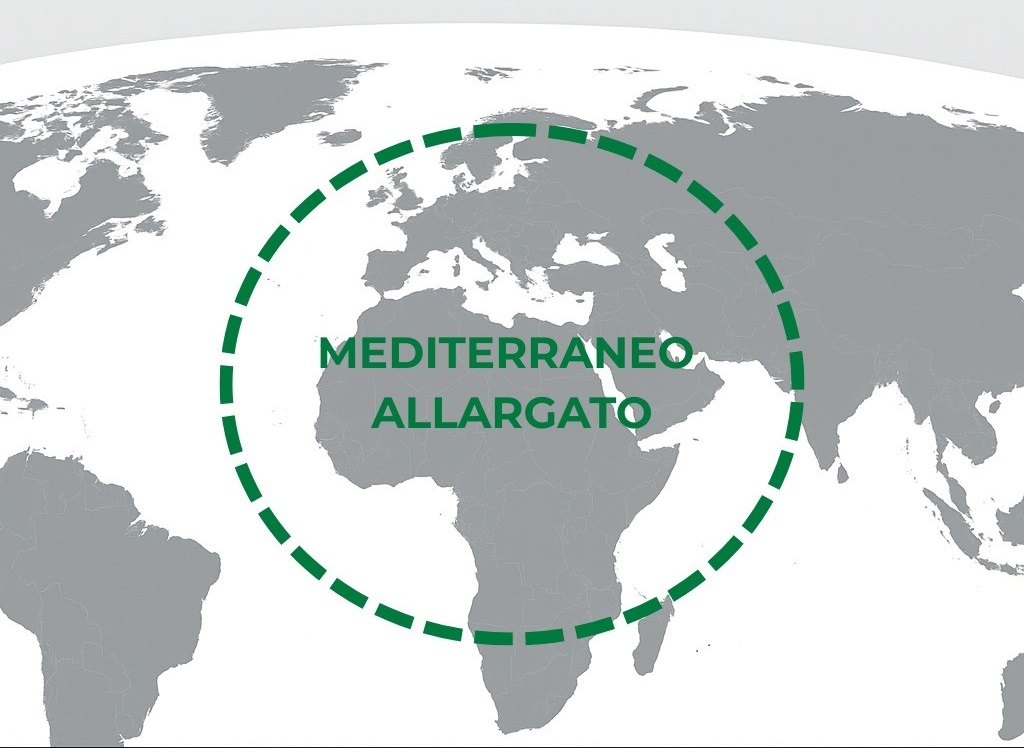
Decisions on the operational aspects of defence policy also aimed to adjust the balance between European, transatlantic and enlarged Mediterranean dimensions. Four years after the outbreak of Russia-Ukraine war, the latter remains the priority for Italian military deployments, encompassing Europe, North Africa, Sahel, the Horn of Africa and the Middle East. In 2025, the yearly decree law confirmed 39 Italian military operations abroad, with an average number of 7,750 personnel deployed.[6] The bulk of Italy’s commitment remains in the enlarged Mediterranean, from Kosovo to Lebanon, from Iraq to the Red Sea, and in various areas of Africa. In the Sahel, in particular, the Italian military is the only Western one still operating in Niger after the latest coup d’état, while a new bilateral mission has been launched in Jordan, thus consolidating the presence in the Levant.
Due to the conflict between Israel and Hamas and the Global Sumud Flotilla’s initiative to deliver humanitarian aid to Gaza, in September 2025 Defence Minister Guido Crosetto decided to deploy the Italian Navy frigate Fasan to assist and escort Italian citizens aboard the Flotilla as they sailed in international waters through the Mediterranean Sea. That decision was particularly important vis-à-vis the Israeli government, as well as for the Italian public opinion at a time of highly polarised domestic political debate over Gaza. These debates featured large rallies in Italian cities to protest not only against the Israel offensive but also, broadly speaking, against Italy’s military spending and defence industry. The fact that a frigate built by Fincantieri and featuring weapons provided by Leonardo – the two largest Italian defence industries – escorted the Flotilla exposed some of the contradictions of the domestic debate on defence policy and spending.
The cautious reaction to the Iran war and Greenland crisis
A few months after the Flotilla episode, the outbreak of the US-Israel war against Iran caught Italy off guard, including the Defence Minister himself, who was in Dubai when the air bombing began. In the following days, the government managed to evacuate thousands of civilian personnel from Arab countries targeted by the Iranian counter-offensive. The Italian military deployments in Iraq and Kuwait were gradually withdrawn because of the attacks against their bases,[7] as NATO Training Mission Iraq relocated its activities to Naples.[8] At the same time, Rome deployed the Martinengo frigate near Cyprus in a concerted effort with France and Greece after a hostile drone reached the British military base on the Island to demonstrate EU solidarity. The executive is also considering deploying missile defence systems to the Arab countries, even though the limited availability of platforms poses a strong military constraint, as an Italian Samp/T battery is already positioned on NATO’s eastern flank.
Broadly speaking, Italy had to adjust its traditional approach to the enlarged Mediterranean, based on dialogue and stabilisation, to the destabilising acts of its major NATO ally. Rome is not directly participating in any form in the Iran war. Yet the US bases on Italian territory, as others in NATO European countries, are used for logistics activities according to the long-standing bilateral treaties, including the Status of Force Agreement (SOFA). The government has not openly criticised the US-Israeli offensive, while recognising that it is “outside the perimeter of international law”.[9] Rome rather condemned Iran’s reaction against third countries in the region, which are important partners for Italy, and called for de-escalation.
As other European allies, Italy refused the NATO involvement in the war requested by Trump. On 19 March Meloni rather agreed with France, Germany, Japan, Netherlands and the UK a multinational initiative expressing the “readiness to contribute to appropriate efforts to ensure safe passage through the Strait”.[10] The initiative has then been joined by from Canada and other like-minded countries in Europe, Middle East and the Indo-Pacific. Its implications and fate remain unclear, yet it is notable as novel, original effort to build an ad hoc coalition without the US to play a stabilising role in the Gulf. Another adjustment of Italy’s defence policy to the ruptures brought by the Trump administration on transatlantic relations.
Earlier in 2026, the crisis over Greenland had again put under pressure the balance between the transatlantic and European dimensions of Italian defence policy. On 6 January, Meloni joined other six European countries – the major NATO members in Europe – as a signatory of a common statement on Greenland highlighted that “Security in the Arctic must […] be achieved collectively, in conjunction with NATO allies including the United States, by upholding the principles of the UN Charter, including sovereignty, territorial integrity and the inviolability of borders” and concluding that “Greenland belongs to its people. It is for Denmark and Greenland, and them only, to decide on matters concerning Denmark and Greenland”.[11]
Italy’s signature on the statement signalled Meloni’s prioritisation of European security and NATO cohesion with respect to the bilateral relations with Washington. However, just a few days later, Italy did not participate in the ad hoc coalition including France, Germany, UK, Netherlands and Scandinavian countries undertaking a joint military exercise in Greenland - an important political and symbolic move. The crisis somehow de-escalated, and the NATO Arctic Sentry mission was then launched to increase the security of the region as well as to prevent another intra-Alliance escalation. In the meantime, through 2025 the government had elaborated Italy’s first-ever Arctic Policy, a joint strategic document released by the Ministry of Foreign Affairs, the Ministry of Defence and the Ministry of University and Research in January 2026.[12]
Deterring Russia on the Eastern flank and confronting its hybrid threat
The interest in the Arctic region added to existing commitments in the enlarged Mediterranean as well as on NATO’s eastern flank. Since 2022 Italy has led the allied multinational battalion in Bulgaria and is present in Latvia and Hungary. In 2025 the government decided to augment its ground forces on Bulgarian soil to brigade level and to increase the aircraft deployed for NATO Air Policing. Notably, in September, Italian F-35s, as part of the allied deployment, carried out a delicate scramble to force Russian MiGs out of Estonian airspace. Previously, an Italian Air Force’s early warning aircraft contributed to the NATO operation to shoot down a Russian drone entering the Polish airspace from Belarus.
Furthermore, in order to implement the NATO Force Model agreed upon by the allies to deter Moscow, in 2025 the government funded the establishment of a very high operational readiness task force, with a maximum strength of 2,867 personnel. The task force encompasses 359 land vehicles, 15 aircraft and 4 vessels. This is a significant decision in terms of military posture, as this contingent would be the first reinforcement to be deployed on NATO’s eastern flank in the event of a Russian escalation. Practically, this means that the task force’s personnel are not available for other operations in the enlarged Mediterranean, constraining the Italian room of manoeuvre in that region.
Despite the growing demand for armed forces deployment on NATO’s eastern flank and in the enlarged Mediterranean over the last four years, the Meloni government has not reduced the activities of around 5,000 army units deployed in Italian cities via the operation Strade Sicure (Safe Streets). Domestic politics considerations, particularly from the League, continue to support an operation which has a marginal effect on national security. Yet Strade Sicure has a negative impact on the army’s readiness, training and mindset by diverting the military from the deterrence and defence against Russia in a scenario of large-scale, high-intensity and prolonged war.
At the same time, the Defence Minister called out on several occasions the Russian aggressiveness in the cyber and cognitive domains. Notably, in November 2025, Crosetto published a non-paper entitled “Countering Hybrid Warfare: An Active Strategy”,[13] which draws public attention to Italy’s vulnerability to the hybrid warfare waged by Russia and China. However, the non-paper is not a ministerial directive, therefore it does not automatically lead to concrete acts by the Ministry to implement such proposals.[14]
A concrete act is the decree approved in December 2025 by the government setting the target of 160,000 active-duty personnel for the Army, Navy and Air Force until 2033. It is a legally binding act which reverses the trend to reduce the armed forces’ size started in 2011. The decree also features several practical recruitment measures – including raising certain age limits – to achieve this goal, while also streamlining military healthcare at the joint level.[15] However, no provisions have been adopted regarding reserve forces, nor have any changes been made to the draft service: two topics that have received considerable media attention in 2025. An overall reform of the Italian military is being elaborated by the Ministry of Defence,[16] but its features and timing are still unclear. As the next general election will take place in 2027, the window of opportunity to approve such reform in Parliament is rather short.
The military support to Ukraine and domestic politics’ constraints
Meanwhile, the Meloni government continues to deliver military aid to Kyiv despite the Trump administration’s position on the conflict. According to Italy’s Chief of Defence Staff Luciano Portolano, as of December 2025, Italy had donated over 3 billion euros of military equipment.[17] At the end of the year, the government approved the fourth yearly decree to authorise such donations: the act’s structure remains exactly the same as the previous ones, but at the request of the League, it emphasises that the aid also includes logistics, energy and healthcare for Ukrainian civilians.[18] Such a reframing of political narrative helped keep the ruling coalition’s consensus on that policy despite rising criticism from the far right. While Rome continued to ship military equipment to Kyiv, it has not joined the Prioritised Ukraine Requirements List (PURL) NATO initiative, whereby allies other than the US buy American systems to offer to Ukraine.
Broadly speaking, with respect to Ukraine, the Meloni government has acted in concert with other European countries while presenting its own views, both to support Kyiv militarily and economically and to convince Trump not to favour Russia in the diplomatic talks. On the first front, Rome opposed the direct use of the Russian assets frozen in the EU, while pushing for the establishment of an EU 90 billion euro debt to ensure financial assistance to Kyiv for the next couple of years – a proposal approved by the European Council at the end of 2025. Towards Washington, Meloni used its personal communication channels with Trump to make the case for a fair and lasting peace in Ukraine and regularly joined European diplomatic campaigns such as the top-level meeting in Washington improvised after the Anchorage summit between the US and Russia presidents. Meloni, Crosetto, Foreign Minister Antonio Tajani, as well as President of the Republic Sergio Mattarella and large parts of the Italian political spectrum, repeatedly made the case that Russia began the war and represents a threat not only for Ukraine but also for Europe’s and Italy’s security.
Against this backdrop, Meloni repeatedly made it clear that Italy will not send troops to Ukraine to guarantee a possible peace deal between the belligerents. The main reason is that League did draw a red line in this regard, and the prime minister accepted it as part of a broader political compromise on the support for Ukraine. Large part of the opposition in the Parliament is against such deployment too, as the majority of electorate and public opinion does not want Italian armed forces in Ukraine. However, Italy regularly participates in the meetings of the coalition discussing such a mission. As a matter of fact, so far only France, the UK and a few other countries openly committed to possibly deploying troops in Ukraine, while others referred to air or naval capabilities. Probably a smaller group within the so-called ‘coalition of the willings’ would in the end deploy troops while the others would provide various forms of indirect support,[19] with Italy certainly joining the latter group of supporters. In this case, the crucial issue for the government is not to adjust the equilibrium between the transatlantic and European dimensions. It rather is to balance the isolationist domestic pressure against the need to play a role in the security of Ukraine, Europe and ultimately Italy itself.
Against this backdrop, two other developments are notable. First, the decision within NATO to hand over the Naples joint force command from American to Italian leadership, within a broader transition whereby the UK took over the Norfolk command while German and Polish generals will rotate as Brunssum joint force command.[20] Second, the fact Italy did not join the 2026 French-led initiative on nuclear deterrence involving Germany, Poland, the UK and other European countries beyond the allied nuclear sharing agreements. Both elements signal that Italy continues to prioritise the NATO framework for collective deterrence and defence.
Keep calm, adjust and carry on
In conclusion, the fil rouge of the major defence decisions taken during the first year of the second Trump administration has been to adjust Italian policy to shifts and crises while maintaining its overall balance between transatlantic, European and enlarged Mediterranean dimensions. This is largely a reactive posture, to some extent unavoidable considering the uncertainty surrounding the Trump administration’s decisions. But it is not merely a muddling through approach. There is an underlying vision on national security and interests, which can be disputed but not denied. This vision was outlined already in the Meloni speech to ask for the confidence vote by the Italian Parliament back in 2022,[21] and has been rather consistently pursued over the last four years through the aforementioned adjustments. It can be summarised as follows.
First, the US remains a major ally for Italy and continues to be needed for European and national security, particularly for deterrence and defence vis-à-vis Russia. Second, NATO is the framework to organise such collective deterrence and defence, within which the European pillar should be enhanced. Third, Europe should become more autonomous and capable also in military terms, and each avenue to achieve this goal – at national, bilateral, mini-lateral and EU levels – is pragmatically considered, particularly concerning cooperative procurement and military budgets. Fourth, the enlarged Mediterranean remains the priority area for national security and national interests, to be pursued bilaterally, through ad hoc formats – including the Mattei plan for Africa – and, to some extent, via NATO and the EU. Last but not least, the balance between the European, transatlantic and enlarged Mediterranean dimensions of Italy’s defence policy has to adjust to crises and changes, but an overall equilibrium should be kept.
Such a vision presents strong continuity with the traditional foreign and defence policy of Italian governments during and after the Cold War, adding to it a conservative tinge resulting from the ruling coalition’s political background.[22]Overall, Giorgia Meloni holds a rather realist view of international relations and defence policy, which she has publicly expressed on several occasions. In December 2025, at the Italian Joint Operations Command, she stated that “only a credible military force can deter war, because peace does not come spontaneously; peace is above all a balance of power: weakness invites the aggressor, strength repels the aggressor”.[23] The relative stability of the Meloni government, the third longest serving since World War II, has helped to implement this vision from 2022 onwards, and suggests that the government will keep calm, adjust and carry on at least until the 2027 general elections.
Alessandro Marrone is Head of the “Defence, security and space” programme at the Istituto Affari Internazionali (IAI).
[1] Italian Ministry of Defence, Documento programmatico pluriennale 2025-2027, September 2025, p. 94-95, https://www.difesa.it/assets/allegati/3756/documento_programmatico_pluriennale_2025-2027_pdfa.pdf.
[2] Marrone, Alessandro and Gaia Ravazzolo, “Il Documento Programmatico della Difesa 2025-2027: priorità, budget e domini operativi”, in AffarInternazionali, 22 October 2025, https://www.affarinternazionali.it/?p=114484.
[3] Italian Government, European Council Meeting of 19-20 March and Middle East Crisis: President Meloni’s Address to the Senate, 11 March 2026, https://www.governo.it/en/node/31338.
[4] Italian Army website: Nuovo elicottero da esplorazione e scorta AH-249, https://www.esercito.difesa.it/equipaggiamenti/nuovo-elicottero-da-esplorazione-e-scorta-ah-249/83580.html.
[5] Giansiracusa, Aurelio, “Site activation della LHD Trieste per le operazioni con gli F-35B”, in Ares Osservatorio Difesa, 21 September 2024, https://aresdifesa.it/?p=51954.
[6] Italian Government, Deliberazione del Consiglio dei ministri in merito alla partecipazione dell’Italia a ulteriori missioni internazionali, adottata il 19 febbraio 2025 (Anno 2025), https://www.senato.it/service/PDF/PDFServer/BGT/1446079.pdf.
[7] Carli, Andrea, “Drone su Erbil, Crosetto: «Attacco deliberato». In questa base l’Italia addestra le forze curde”, in Il Sole 24 Ore, 12 March 2026, https://www.ilsole24ore.com/art/crisi-iran-colpita-base-italiana-erbil-qui-vengono-addestrate-forze-sicurezza-curde-AI5EoVuB.
[8] NATO, NATO Mission Iraq Posture Adjusted, 20 March 2026, https://shape.nato.int/news-releases/nato-mission-iraq-posture-adjusted.
[9] Italian Government, European Council Meeting of 19-20 March and Middle East Crisis, cit.
[10] UK et al., Joint Statement from the Leaders of the United Kingdom, France, Germany, Italy, the Netherlands and Japan on the Strait of Hormuz, 19 March 2026, https://www.governo.it/en/node/31375.
[11] France et al., Joint Statement on Greenland, 6 January 2026, https://www.governo.it/en/node/30694.
[12] Italian Ministry of Foreign Affairs et al., Italy Arctic Policy. Italy and the Arctic: The Values of Cooperation in a Rapidly Changing Region, January 2026, https://www.esteri.it/wp-content/uploads/2026/01/WEB_strategia-artica-italiana_ENG_16012026.pdf.
[13] Italian Ministry of Defence, Countering Hybrid Warfare: An Active Strategy. Non-paper, November 2025, https://www.difesa.it/assets/allegati/83732/non-paper_countering_hybrid_warfare.pdf.
[14] For a personal analysis, check: Tessari, Paola, “Il contrasto alla guerra ibrida, nuova priorità della difesa italiana”, in AffarInternazionali, 16 December 2025, https://www.affarinternazionali.it/?p=115482.
[15] Italian Government, Comunicato stampa del Consiglio dei Ministri n. 151, 11 December 2025, https://www.governo.it/it/node/30565.
[16] Italian Ministry of Defence, DDL riforma Difesa: presentato al Ministro il nuovo modello di riorganizzazione delle Forze Armate, 16 February 2026, https://www.difesa.it/primopiano/ddl-riforma-difesa-presentato-al-ministro-il-nuovo-modello-di-riorganizzazione-delle-forze-armate/89243.html.
[17] Carli, Andrea, “Portolano: ‘To Date Italy Has Supplied Ukraine with Arms and Equipment Worth over Three Billion’”, in Il Sole 24 Ore, 28 December 2025, https://en.ilsole24ore.com/art/portolano-to-date-italy-has-supplied-ukraine-with-more-than-three-billion-in-weapons-and-equipment-AIU8HXV.
[18] Canettieri, Simone, “Approvato il decreto Ucraina: ci sono anche gli aiuti «militari», assente il vicepremier Salvini”, in Corriere della Sera, 29 December 2025, https://roma.corriere.it/notizie/politica/25_dicembre_29/approvato-il-decreto-ucraina-ci-sono-anche-gli-aiuti-militari-assente-il-vicepremier-salvini-c278c80b-798d-4bc7-9798-3ca7ac882xlk.shtml.
[19] Murgia, Nicolò, “Sfide e interrogativi della coalizione dei volenterosi”, in AffarInternazionali, 19 February 2026, https://www.affarinternazionali.it/?p=116139.
[20] “Italy Takes NATO’s Naples Command”, in Decode39, 10 February 2026, https://decode39.com/13452.
[21] Italian Government, President of the Council of Ministers Giorgia Meloni’s Parliamentary Address on the Government Programme, 25 October 2022, https://www.governo.it/en/node/21000.
[22] Marrone, Alessandro, “The Defence Policy of Giorgia Meloni’s Government: A Traditional Posture with a Conservative Tinge”, in IAI Commentaries, No. 22|56 (November 2022), https://www.iai.it/en/node/16272.
[23] “Meloni: ‘La pace si protegge con la forza, grazie agli italiani in missione’”, in Adnkronos, 22 December 2025, https://www.adnkronos.com/politica/meloni-la-pace-si-protegge-con-la-forza-grazie-agli-italiani-in-missione_3FhCzU8YBkFray3IRwf6fa.